
BA (Hons) Musical Theatre presents Young Frankenstein at Yvonne Arnaud Theatre. 1-6 June 2026.
One of the most frequently adapted works in world literature is Mary Shelley’s Frankenstein. The story of the ambitious young scientist, Victor Frankenstein and his relationship with his Creature is reinterpreted by every generation across multiple media, including film versions, novels, TV, gaming, and theatre. Few works of literature have proven as enduring and ripe for transmedial adaptation.
The most famous of these is certainly James Whale’s 1931 film version starring Boris Karloff, which delivered the square-headed oversized monster and played fast and loose with the original story, inventing characters such as Victor’s assistant, Fritz. More recent film iterations have been directed by Kenneth Branagh (with Robert DeNiro as the Creature) and Guillermo del Toro’s 2025 Netflix production with Jacob Elordi as an extremely sympathetic being, a long way from Karloff’s violence, but none of these has had the cultural impact of Whale’s movie. And then there is Mel Brooks…
Young Frankenstein is one of the clearest examples of how parody can be both tribute and reinvention. Taking its inspiration from Whale’s 1931 film and his 1935 follow-up, Bride of Frankenstein, it was first released as a film in 1974 and adapted into a Broadway musical in 2007. The work demonstrates the distinctive comic style of Mel Brooks, a writer and director whose career has been built upon spoofing established genres, cultural fears and artistic traditions.
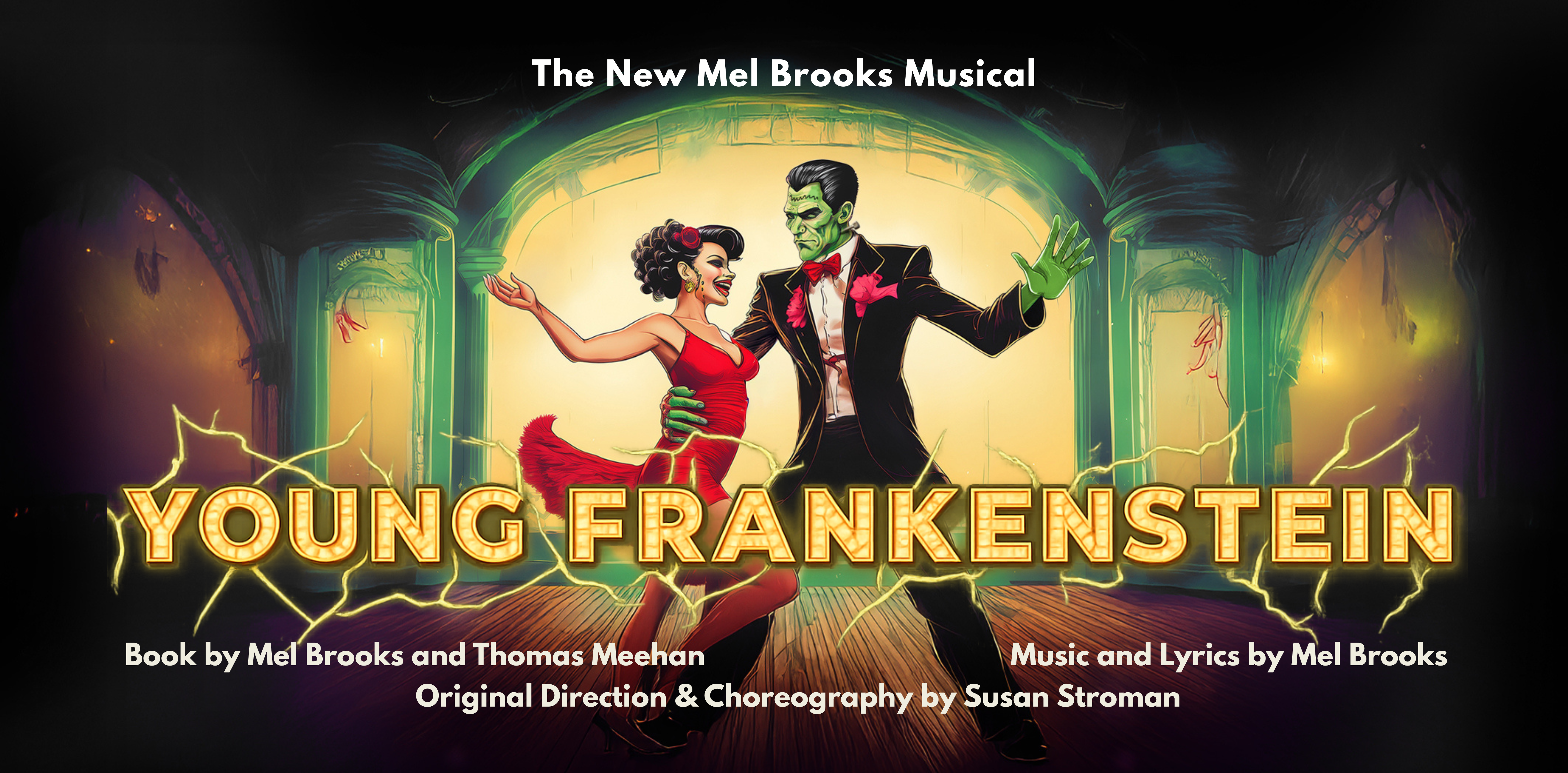
While many comedies simply mock their subjects, Brooks’ work succeeds because it combines satire with genuine affection for the material being imitated. In the case of Young Frankenstein, Brooks transforms the Gothic horror tradition into musical comedy while still preserving the atmosphere, imagery and emotional stakes associated with classic monster stories.
Throughout his career, Brooks has targeted genres that audiences immediately recognise. Blazing Saddles parodies the American Western, while Spaceballs mocks science fiction epics such as Star Wars. Likewise, Robin Hood: Men in Tights satirises heroic adventure stories, and Dracula: Dead and Loving It spoofs vampire horror. Brooks’ comedy often relies on exaggeration, absurdity, slapstick humour and deliberate anachronisms, but beneath the comedy lies a sharp understanding of the original texts and genres.
While Brooks’ films frequently include musical numbers, it was with the Broadway musical adaptation of The Producers (2001) that Brooks made his impact on musical theatre. When developing this show, he apparently approached Jerry Herman, the songwriter responsible for Hello Dolly!, Mame and La Cage Aux Folles, who rejected the assignment, telling Brooks that on the evidence of the three songs in the original film version (including Springtime for Hitler) that he should write the score himself.
Following the stellar success of The Producers, which still holds the record for winning the greatest number of Tony Awards of all time, Brooks turned his attention to Young Frankenstein. The stage adaptation of Young Frankenstein demonstrates how Brooks’ humour naturally lends itself to the stage. The Broadway version expanded the original film through large ensemble numbers, elaborate choreography and self-aware theatrical humour. Threaded through the entire show is Brooks’ long-standing love of classic Hollywood entertainment and vaudeville performance traditions.
Ultimately, Young Frankenstein illustrates why Mel Brooks remains one of the most influential comic writers of the twentieth century. His work demonstrates that parody can do more than ridicule; it can honour artistic traditions while making them accessible to new audiences. He appears to be unstoppable; as he prepares to celebrate his 100th birthday on the 28th June, he has just announced a new film project. Why, we may even see another new musical from him!
Prof Julian Woolford,
Head of Musical Theatre
Book tickets here: gsauk.org/events
- Previous
- Back to news
- Next